TECHNOLOGY TRENDS
Feb 10, 2026
Quantum Computers: A Revolution or a Digital Catastrophe?
"Why do we need quantum-safe encryption before quantum computers arrive — and why are we racing to build both as fast as possible?"

Let’s be clear from the beginning: quantum computers are not simply “faster computers.” They are fundamentally different machines that use the physics governing subatomic particles — quantum mechanics — and can perform certain calculations that would take classical computers thousands or even millions of years.
Companies such as Google, IBM, Microsoft, and dozens of others are racing to develop these machines.
Quantum computers carry the potential to offer new solutions to humanity’s most fundamental problems. Some of their most promising applications include:
Drug discovery and healthcare
By modeling molecular interactions that classical computers cannot simulate, quantum computers could reduce drug development timelines from years to months. They hold the potential to accelerate breakthroughs in cancer research, Alzheimer’s treatment, and personalized medicine design.A revolution in materials science
Next-generation batteries, more efficient solar panels, and even room-temperature superconductors require atomic-level design. Quantum computers could optimize materials “atom by atom,” transforming energy systems, manufacturing, and semiconductor design.Climate modeling and optimization
By more accurately modeling chaotic climate systems, they could improve carbon capture technologies, energy grid optimization, and environmental solutions.Acceleration of artificial intelligence
By speeding up certain types of optimization and training problems, quantum computing could enable more powerful learning and decision-making approaches — particularly in computational domains where quantum advantage exists.
However, the same technology with its massive parallel processing capacity and exponential speed advantages, poses a serious threat to the encryption infrastructure that currently protects banks, governments, hospitals, and corporations. In fact, some companies have already begun building defenses before quantum computers fully arrive.
How Current Encryption Works (And Why It Will Eventually Fail)
Today’s encryption systems (the technology that protects your banking, medical records, state secrets, and private communications), rely on a simple mathematical trick: Multiplying two very large prime numbers is easy. Factoring the result back into those original primes is extremely difficult.
If I give you the number 15, you can quickly see that it equals 3 × 5.
But if I give you a 617-digit number (the size used in RSA-2048 encryption), even the fastest supercomputers in the world would take thousands of years to factor it. This mathematical asymmetry is the only thing protecting our secrets.
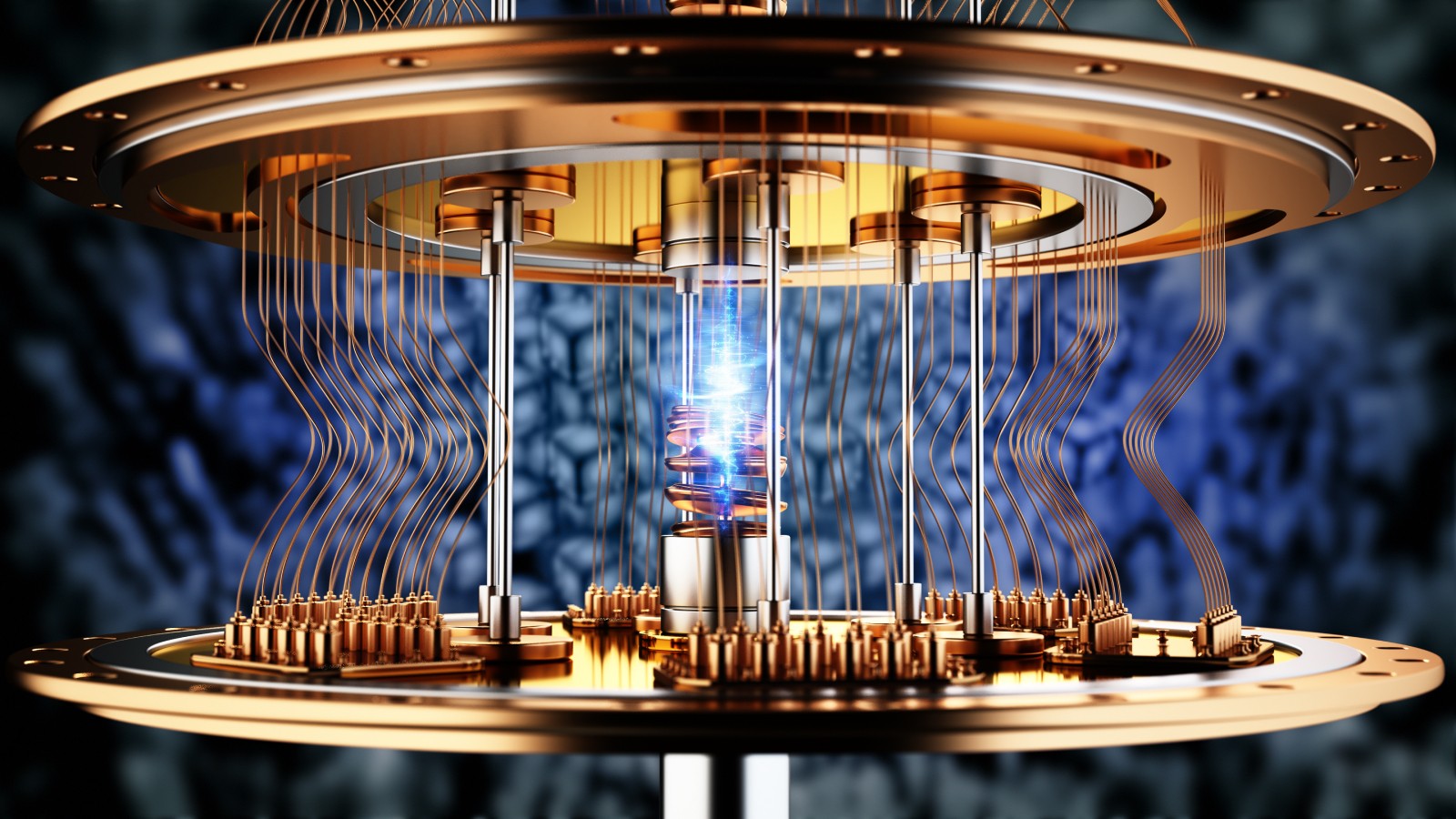
When quantum computers become sufficiently powerful, they will break RSA-2048 encryption as easily as cracking a walnut.
If encryption collapses, the consequences would be enormous:
Financial systems
Bank transactions, credit cards, stock trading, cryptocurrency wallets — many cryptocurrencies could become worthless overnight.
Governments and military
Classified communications, diplomatic cables, nuclear command systems, intelligence operations — decades of state secrets could suddenly become readable.
Healthcare
Medical records, genetic data, patient privacy — permanently exposed.
Corporate espionage
Trade secrets, merger negotiations, R&D data, intellectual property — billions of dollars in corporate value could be at existential risk.
Personal privacy
Your emails, messages, photos, location history — everything you believed to be private could become public.
Today, intelligence agencies around the world are already recording encrypted internet traffic. Your emails, bank transactions, corporate secrets, government documents — everything. The data cannot be decrypted today. But in 10–15 years, when sufficiently powerful quantum computers exist, it may all become readable.
So the question becomes: Can this be prevented?
The Paradox: Two Races Against Time
While quantum computers are not yet powerful enough to break modern encryption, some organizations are already transitioning to quantum-safe encryption.
The good news: You do not need a quantum computer to defend against one.
Quantum computers are still unstable. Last year, Julian Kelly from Google Quantum AI stated that reaching practical applications achievable only by quantum computers may take around five years.
The problem for cryptography is this: upgrading global encryption infrastructure may take just as long — if not longer.
That means we must transition to quantum-safe encryption within the next 5–10 years — before the threat fully materializes.
In such an ecosystem, governments must simultaneously develop quantum computers (for strategic and offensive advantage) while strengthening encryption systems (for defensive protection).
This creates a unique historical moment: nations are racing both to build the most powerful code-breaking technology — and to protect themselves from it.
Throughout history, new technologies have not only created opportunities but have also reshaped power balances. Quantum computing represents a profound strategic advantage for states. The first actor to achieve sufficiently advanced quantum capability could gain superiority across radar systems, classified communications, financial infrastructure, and intelligence operations.
Countering such an imbalance through classical methods would become increasingly difficult.
“Humanity is building the most powerful technology it must simultaneously defend itself against.”
In summary, quantum computers represent an extraordinary opportunity for humanity. From drug discovery to climate solutions, from materials science to artificial intelligence, they hold transformative potential.
But the same technology also carries the power to undermine the very foundation of digital security.
I am attaching a short video at the end that explains why quantum computers are considered a technology capable of changing everything.
Perhaps for the first time, a revolution — and the risks it brings — are this deeply intertwined.